How To Cook Salmon With Crispy Skin In The Oven

Let’s be honest: cooking fish at home can feel like a high-stakes game of kitchen roulette. You’re either a hero with a perfect fillet or a sad person scraping burnt skin off...

Let’s be honest: cooking fish at home can feel like a high-stakes game of kitchen roulette. You’re either a hero with a perfect fillet or a sad person scraping burnt skin off a pan. But I’m here to tell you that making salmon with crispy, crackly skin in the oven is actually easier than getting your teenager to look up from their phone.
First, let’s talk about why we even bother with the skin. That salty, crunchy top layer is like nature’s chip—a little golden trophy for your meal. It turns a boring Tuesday night into a “fancy dinner” moment without you having to put on real pants.
So, here’s the secret: we’re going to trick the oven into acting like a frying pan. This method is called the “hot pan reverse sear,” but don’t let the fancy name scare you. It’s basically like giving your salmon a spa day, then slapping it with a hot towel.
Must Read
The Setup: Patience and Paper Towels
You start with your salmon fillet. Pat it dry with paper towels. I mean really dry. You want the skin to look as parched as a houseplant you forgot to water for three weeks. Any moisture is your enemy; it’s the villain that makes skin soggy and sad.
Season the skin side generously with salt. Don’t be shy. Salt is the best friend of crispy skin, like that one loud friend who always gets you into good trouble. Give the fillet a little rest on a plate for five minutes while you preheat your oven.
The Oven Trick: Hot Start, Cool Finish
Now, grab an oven-safe skillet. Cast iron is the dream, but any metal pan works. Put it on your stovetop over medium-high heat with a splash of oil—enough to shimmer like a disco ball. Wait until it’s hot enough that a drop of water sizzles and dances like it’s at a club.
Place the salmon skin-side down in the hot pan. You should hear a satisfying “sssssss.” If you don’t, you’re not ready, and you’ll end up with pale, flabby skin—like a forgotten party balloon. Press gently on the fillet with a spatula for 10 seconds to ensure full contact.
Let it cook on the stove for exactly three to four minutes. Do not touch it. Do not poke it. Do not even breathe on it. It’s like watching a toddler with a full cup of juice; interference leads to disaster.
Into the Oven: The Easy Part
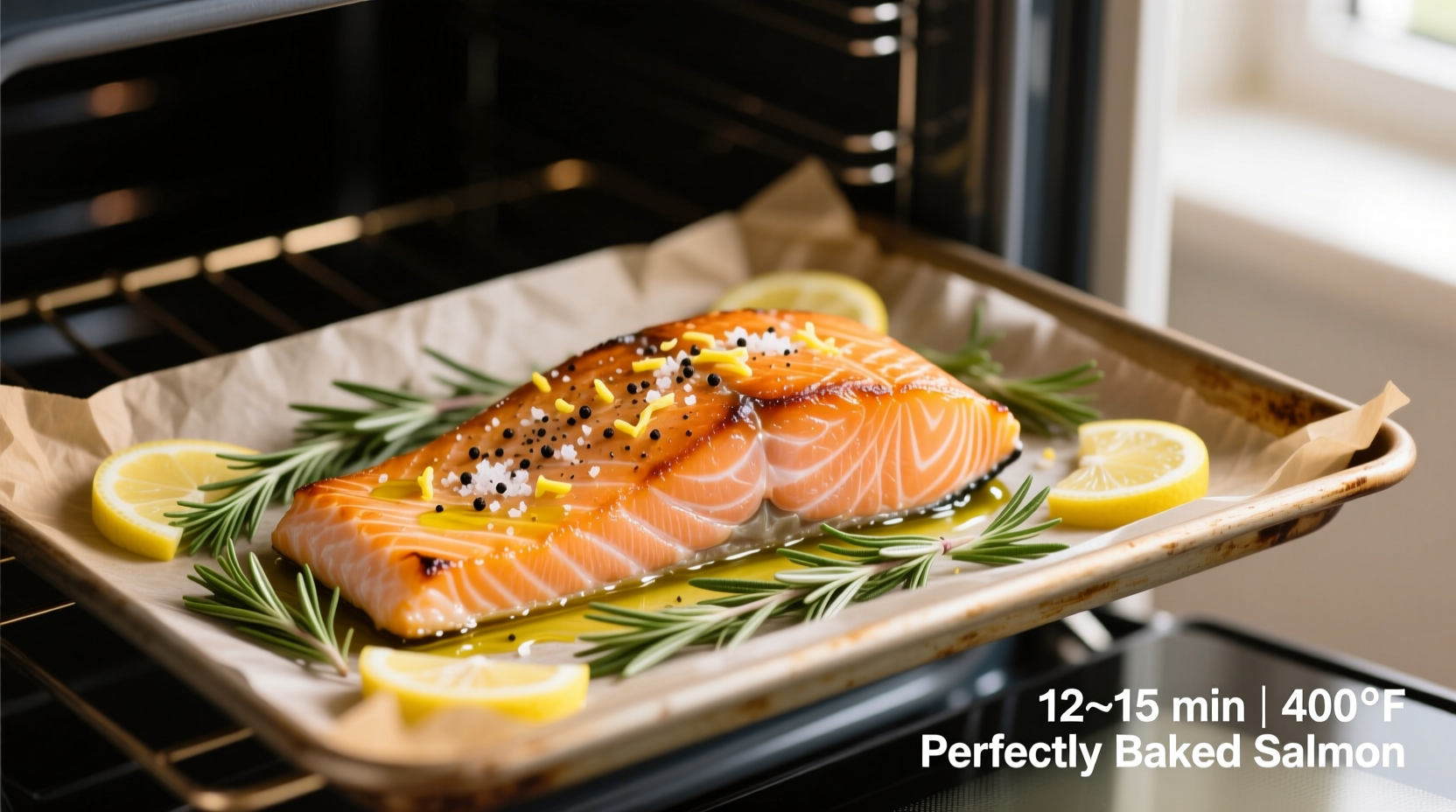
Slide that entire skillet into a preheated 400°F (200°C) oven. No flipping needed. The direct heat from the pan keeps the skin frying, while the oven gently cooks the flesh from above. It’s multitasking without the stress—unlike trying to fold laundry while on a conference call.
Bake for another six to eight minutes depending on thickness. You’re looking for the flesh to turn from translucent to a soft, opaque coral. If it flakes easily with a fork, you’ve won. If it feels like rubber, you’ve lost. The line is thin, but this method gives you a huge margin for error.
 Salmon Cooking Time: Minutes by Method & Thickness
The Lifting Ritual
Here’s the moment of truth: getting it out of the pan. Use a thin metal spatula and slide it under the skin like you’re sneaking a cookie from the jar. Lift gently. If the skin sticks, you didn’t dry it enough or the pan wasn’t hot. That’s okay—we’ve all peeled skin off a pan while whispering swear words.
Serve it skin-side up so everyone can see that glorious, crackling top. It should look like stained glass made of bacon. No one needs to know you listened to a true-crime podcast while doing it. That’s your little secret.
Why This Works for Everyday Life
This recipe is a lifesaver because it’s nearly impossible to overcook the inside while you’re bossing the skin. It’s forgiving. It’s the culinary equivalent of a pair of stretchy jeans—comfortable, reliable, and makes you look like you have your life together.
Plus, clean-up is one pan and a spatula. No splattering oil on your stove, no hovering over a spitting pan like a nervous hawk. You can toss the pan in the sink and pretend you’re a pro chef who has done this a thousand times.
When Life Gives You Leftovers
Honestly, this salmon is so good cold that you’ll find yourself picking at it from the fridge at 11 p.m. The skin stays crunchy for a surprising amount of time—like a potato chip that refuses to go stale. That’s a small miracle.
So go ahead, buy that salmon. Pat it dry like you mean it. Heat that oil until it shimmers. And remember: you are not cooking dinner; you are making a memory (or at least a really, really good Instagram story).
And if the skin tears? Shrug. Call it “rustic.” Eat it anyway. It’s still delicious, and you’re still the hero of your own kitchen. Now pass the lemon.
