Should Salmon Be Room Temperature Before Cooking

Let’s be honest: cooking salmon can feel like a high-stakes game of culinary roulette. You’ve got your fancy fillet, a splash of lemon, and a vague memory of something your au...

Let’s be honest: cooking salmon can feel like a high-stakes game of culinary roulette. You’ve got your fancy fillet, a splash of lemon, and a vague memory of something your aunt once said about “letting it sit out.” So, should salmon really be room temperature before cooking? Spoiler alert: It’s not the life-or-death drama the internet makes it out to be—but it does help.
The Great Salmon Stand-Off
Picture this: you’re starving, it’s 6:30 PM, and you pull a cold, slippery salmon fillet straight from the fridge. You slap it into a hot pan, and disaster strikes—the outside turns into a leathery hockey puck while the middle stays cold and raw. That, my friend, is the tragedy of the unacclimated fish.
Leaving salmon out for 15 to 20 minutes—not hours, you’re not making a science project—lets it warm up gently. This means the heat from your pan can actually penetrate the whole fillet, not just the poor outer crust. Think of it like you after a morning coffee: you need a minute to wake up before you can function properly.
Must Read
Why Your Fridge is a Cold-Hearted Vibe
Your fridge is set to about 40°F (4°C), which is basically the temperature of a mountain stream in winter. Salmon likes that when it’s sleeping, but not when it’s about to become dinner. Cooking a fridge-cold fish is like jumping into a cold pool and immediately trying to swim a lap—it’s shocking and inefficient.
When you let it sit out, you’re not “warming it up”; you’re just taking the edge off the chill. The USDA says you shouldn’t leave raw fish out for more than two hours total (one hour if it’s a hot day), but a quick 20-minute breather on the counter is totally fine. Your kitchen counter isn’t a sauna—it’s just a middle ground.
The “But I’m Lazy” Argument
If you’re anything like me, you’ve already Googled “can I skip this step” while holding a frozen salmon brick in one hand. The answer? Yes, you can skip it, but you’ll pay the price in texture. I once cooked a salmon straight from the fridge because I was “too hungry to wait,” and it came out looking like a deflated tire—dry on one end, raw on the other.
It’s not a ruined meal—you can still eat it—but it’s like wearing a winter coat in July. Technically possible, but deeply uncomfortable. Taking 20 minutes to let it sit is the culinary equivalent of letting a wine breathe: you’re doing a small favor for a big reward.
The Great Temperature Debate (With Anecdotes)
My friend Dave, a self-proclaimed “salmon whisperer,” insists on keeping his fillet out for exactly 22 minutes—he sets a timer. When I asked why the precision, he shrugged and said, “Because I once left it out for 45 minutes, and my cat started eyeing it like a jewel heist.” Fair point.
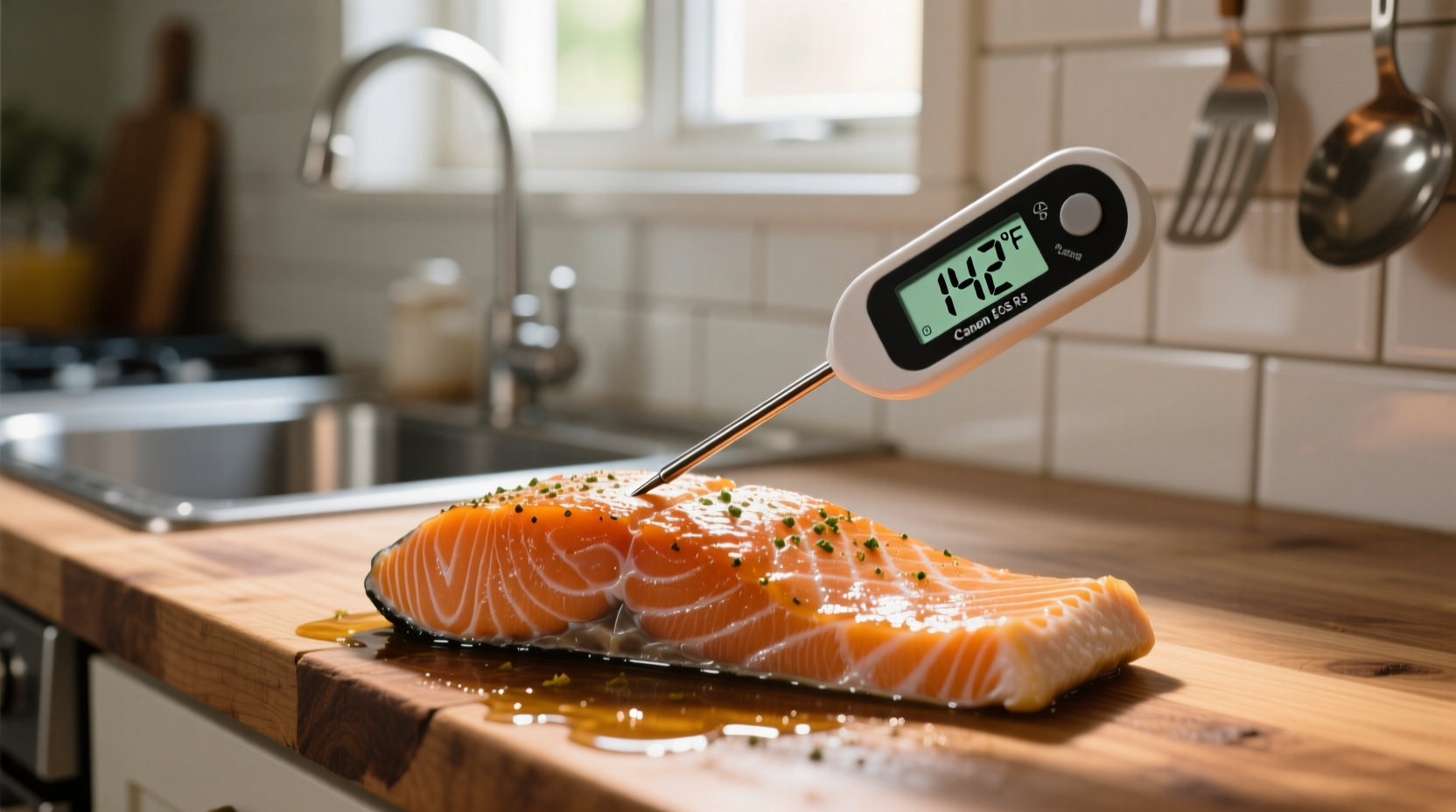 Perfect Salmon Temperature Guide: 125°F to 135°F for Best Results
On the other side, my neighbor Sarah throws her salmon in the pan frozen, straight from the bag. She claims it works “fine,” but I’ve seen her eat a burger with a fork, so I take her advice with a grain of salt. The moral? Room temperature is optional, but it’s the path to a flaky, juicy filet that makes you look like you know what you’re doing.
How to Actually Do It (Without Overthinking)
Here’s the no-stress method: take the salmon out of the fridge, pat it dry with a paper towel (salmon is dramatic about moisture), and sprinkle on some salt. Then, just let it chill on a plate on the counter while you chop a lemon or scroll through your phone. Don’t put it in the microwave—we’re not defrosting a burrito.
After 15–20 minutes, the fillet should feel “less offended” to the touch—not warm, just less cold. If you poke it, it should feel like a cool, slightly firm handshake, not a frozen dead fish. That’s your go signal.
The Final, Easy-Going Verdict
Should salmon be room temperature before cooking? Yes, but don’t stress about it. It’s not a rule written in stone; it’s a gentle suggestion from the fish gods. Do it when you remember, and when you forget, just accept the slightly uneven cook with a shrug and a good sauce (nothing covers up a mistake like aioli).
At the end of the day, cooking is about connecting with your dinner, not performing a lab experiment. So take your salmon out, pour a glass of water, and wait 20 minutes. Your taste buds will nod in approval, and you’ll feel like a calm, collected adult who has their fishy life together. And if someone asks, just say, “Oh, I let it come to room temp—like a pro.” Nod confidently. You’ve got this.
